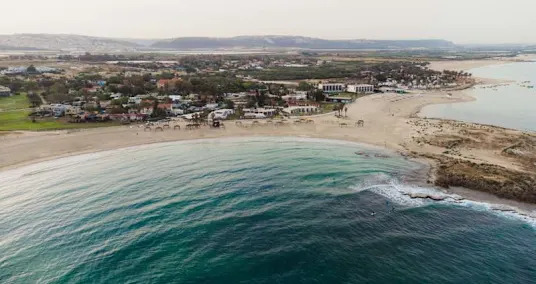
The discovery was made in an ancient shipwreck in the Dor Lagoon near the Carmel Coast, where archaeologists recovered nine pieces of unprocessed iron known as “blooms.”
Researchers from the University of Haifa said Wednesday that an underwater excavation off Israel’s northern Mediterranean coast uncovered what they described as the earliest known cargo of raw iron transported by ship, dating back around 2,600 years, Xinhua reported.
The discovery was made in an ancient shipwreck in the Dor Lagoon near the Carmel Coast, where archaeologists recovered nine pieces of unprocessed iron known as “blooms.” According to the university, the find provides direct evidence of how iron was transported in its earliest commercial stages.
The material was preserved in its original form, having solidified directly in a smelting furnace without undergoing forging or further refinement. Researchers said this distinguishes the cargo from later iron artifacts that typically show signs of shaping or tool-making.
Unlike copper and bronze, which could be melted into liquid form in ancient production processes, iron was heated with charcoal to produce a solid, porous mass. That mass was generally hammered to remove impurities and create denser material suitable for tools and implements.
The recovered blooms showed no indication of that secondary processing stage, suggesting they were transported immediately after production.

Earliest iron shipment discovered in ancient Mediterranean wreck
To determine the age and condition of the cargo, researchers conducted microscopic and chemical analyses.
Radiocarbon dating was also carried out on charred wood embedded in one of the pieces, helping confirm the timeline of the shipment. The findings were published in the journal Heritage Science.
Researchers said the cargo indicates that iron was being moved in raw form from production sites to other locations for further processing, pointing to a level of specialization in ancient manufacturing and trade networks in the Mediterranean.
The University of Haifa said the discovery provides new insight into early iron production and distribution practices in the region.
LATEST POSTS
- 1
 Sound and Delightful: 12 Nutritious Smoothie Recipes
 - 2Ministry: New German petrol price regulation takes effect on April 1
- 3Expert advice for new stargazers: How to begin your amateur astronomy journey
- 4Picking Childcare Administrations for Your Loved ones
- 5Tatiana Schlossberg, a granddaughter of JFK, is dead at 35 after cancer diagnosis




- Savvy Watches: Which One Is Appropriate for You?
- Over 250,000 cases of shredded cheese recalled over possible metal fragments
- What are parents to do as doctors clash with Trump administration over vaccines?
- Thermo Fisher wins contracts as pharma shifts production to US, CEO says
- 'Outrageous and illegal' : UNRWA slams Israel for cutting off its water, comms and electric in Gaza
- Blue Origin’s New Glenn rocket landed its booster on a barge at sea – an achievement that will broaden the commercial spaceflight market
- My skin feels drier, my lips thinner and my makeup heavier. How do I adjust my routine for aging skin?
- Hamas urges Hezbollah to kidnap Israeli soldiers in wake of Knesset passing death penalty bill
- Surf Spot Mechanics: Bells Beach