By Will Dunham
WASHINGTON (Reuters) -Dogs today come in a mind-blowing array of shapes and sizes, from the diminutive pug, Pekingese and Pomeranian to the grand Irish Wolfhound, Great Dane and Saint Bernard. But when did this diversity in canine forms begin? New research shows it dates back many millennia, long before modern breeding practices.
Scientists examined the sizes and shapes of 643 skulls of domesticated dogs and their wolf ancestors dating back roughly 50,000 years, identifying the emergence of canine physical diversity beginning at least 11,000 years ago, around the time the last Ice Age ended.
The findings contradict the notion that such diversity was mainly a relatively new phenomenon driven by selective breeding in recent centuries.
"Traditionally, major morphological diversification - especially extreme size and shape differences - was thought to have occurred only in the past few centuries, following the emergence of formal dog breeds in the 18th to 19th centuries," said bioarchaeologist Allowen Evin of the University of Montpellier and the French research agency CNRS, co-lead author of the research published on Thursday in the journal Science.
"Our study shows instead that substantial cranial diversification was already well established during prehistory," Evin said.
The research showed that significant variation in cranial size and shape among domesticated dogs appeared soon after the canine divergence from their wolf ancestors.
The researchers based their findings on three-dimensional analyses of models of the skulls of 158 modern dogs, 86 modern wolves, 281 ancient dogs and 118 ancient wolves. They identified "recognizably domestic dog morphologies" by about 11,000 years ago in the form of three canine skulls from an archaeological site at the Russian village of Veretye.
"During domestication, dog skulls became proportionally shorter and wider compared with those of wolves," bioarchaeologist and study co-lead author Carly Ameen of the University of Exeter in England said.
"Although we do not observe the extreme morphologies seen in modern breeds, dogs from the Mesolithic and Neolithic periods already represented about half of the cranial diversity present in modern dogs," Ameen said, referring to the time periods known as the Middle Stone Age and the New Stone Age. "These animals lived across Eurasia, reflecting early regional diversification associated with distinct ecological and cultural contexts."
The dog, descended from an ancient wolf population separate from modern wolves, was the first animal domesticated by people, with animals such as goats, sheep, cattle and cats coming later.
"The concept of 'breed' is very recent and does not apply to the archaeological record. Because we only analyzed skull morphology - and lack information on coat color, body size or behavior - we cannot identify specific breeds. However, we did not observe extreme cranial morphologies such as those of bulldogs, pugs or bull terriers," Ameen said.
The timing and location of the domestication of dogs remain a matter of debate. But there is no debate about how important dogs have been to people for millennia. Dogs have been, as Evin put it, "multifunctional partners."
"Beyond their utilitarian roles, dogs have held deep symbolic and social significance as companions, mediators and markers of identity. The archaeological record reflects both practical and symbolic entanglement, showing dogs fully integrated into human societies" for millennia, Evin said.
"Over millennia, humans selected dogs for diverse functional roles - hunting, herding, guarding and sledging - resulting in substantial morphological variation. In more recent centuries, aesthetic and status-driven preferences, along with the rise of kennel clubs, intensified and formalized these differences into distinct breeds," Evin said.
(Reporting by Will Dunham; Editing by Daniel Wallis)
LATEST POSTS
- 1
 New dietary guidelines recommend more dairy, meat and fats: What to know
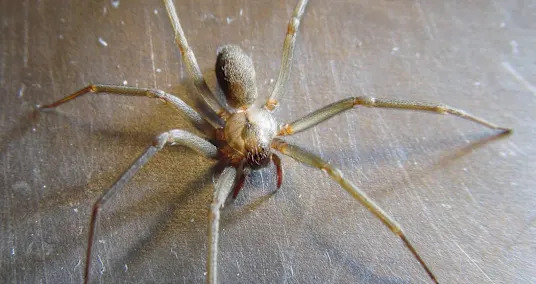
 - 2How does spider venom damage human cells? Researchers uncover the killer mechanism of recluse spider toxin
- 3Home Wellness Basics: Building Your Home Exercise center
- 4Is new Harry Styles music on the way? Fans think so, after a cryptic website and posters pop up.
- 5West Palm Beach Shorecrest, renderings of downtown waterfront condo




- I’m a dad to an autistic child. Here’s how you can make the holidays easier for all of us.
- How food assistance programs can feed families and nourish their dignity
- Giant ‘toothed’ birds flew over Antarctica 40 million to 50 million years ago
- Italy Brings In New Measures In 2026 To Tackle Overtourism
- 6 Agreeable Earphones To Wear
- Instructions to Distinguish the Wellbeing Dangers Related with 5G Pinnacles
- Novartis eyes more bolt-on acquisitions, CEO says
- Bitcoin momentum builds in Abu Dhabi as global interest surges
- Joshua Made Last-Second Seat Change That Saved His Life