Hours after Germany's upper house of parliament, the Bundesrat, approved a package of measures to curb high fuel prices, President Frank-Walter Steinmeier signed plan into law on Friday.
The bill officially takes effect once it is published in the Federal Law Gazette. The package of measures had only been passed by the Bundestag, or lower house of parliament, on Thursday.
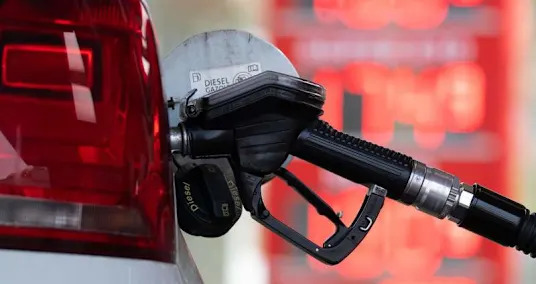
Ahead of the busy Easter travel period, the new law allows petrol stations to raise prices only once per day, at noon (1100 GMT).
Previously, fuel prices were changing sometimes hourly, due to the US-Israeli war in Iran. Price cuts, however, will still be possible at any time.
In addition, Germany's competition authority is to receive more powers to act against excessive prices. In future, companies will have to explain that price increases are objectively justified.
This is intended to make it significantly easier for regulators to take action against excessive fuel pricing.
Whopping 80% say law is inadequate
Although by German standards the law passed very quickly, residents are not impressed.
A clear majority of people in Germany believe the government's measures against rising fuel prices are inadequate, with 80% of respondents surveyed saying not enough is being done, the ZDF's Politbarometer poll released on Friday showed.
Some 14% consider the measures appropriate while 3% say they go too far.
Many people are calling for a temporary cut in taxes and levies on petrol and diesel, the survey found. Some 73% support such a step while 25% oppose it. That's backed by a majority across most party supporters, with only Green party supporters showing a split picture.
LATEST POSTS
- 1
 War in Iran could exacerbate German housing crisis, minister warns
- 2'Wuthering Heights' trailer features Margot Robbie and Jacob Elordi in a steamy forbidden romance
- 3NASA releases new photos of interstellar comet 3I/ATLAS
- 4Picking the Right Home Machines: A Commonsense Aide
- 54 astronauts depart ISS, leaving behind just 3 crewmates to staff the orbiting lab



- Kuwait is softening stance on Israel, dissident tells ‘Post’ after viral UN speech
- Twins were the norm for our ancient primate ancestors − one baby at a time had evolutionary advantages
- Novo Nordisk cuts Wegovy price in South Africa for a second time
- Excelling at Cash The board: A Manual for Monetary Essentials
- Modern surgery began with saws and iron hands – how amputation transformed the body in the Renaissance
- Flu activity rises sharply across US with 7.5 million cases, CDC data shows
- The Minimized Passage Horse: Reconsidering a Symbol for the Cutting edge Period
- Eight Muslim nations condemn Israel's 'dangerous' new death penalty law
- ICAS calls for clearer safeguards in FRC’s TCA policy