When you buy through links on our articles, Future and its syndication partners may earn a commission.

NASA is ramping up its efforts to search for signs of life throughout the universe, and has directed companies to begin developing technologies that will help it do so using the space agency's Habitable Worlds Observatory (HWO) space telescope concept.
Seven companies have been awarded three-year, fixed-price contracts to explore the engineering challenges that need tackling in order to create what will be one of NASA's most powerful telescopes ever. The companies include Astroscale, BAE Systems Space and Mission Systems, Busek, L3Harris, Lockheed Martin, Northrop Grumman and Zecoat.
Each will study ways to fulfill the hardware requirements for HWO, which is being designed to search for signs of life by looking at the light passing through the atmospheres of planets as they orbit stars hundreds and thousands of light-years away. In a Jan. 5 statement announcing the contract selectees, NASA Administrator Jared Isaacman called the project "exactly the kind of bold, forward-leaning science that only NASA can undertake.”
"Humanity is waiting for the breakthroughs this mission is capable of achieving and the questions it could help us answer about life in the universe. We intend to move with urgency, and expedite timelines to the greatest extent possible to bring these discoveries to the world," Isaacman said in the release.
NASA hopes the space telescope can be complete in time to launch by the late 2030s or early 2040s. By then, it will be equipped with technologies that don't yet exist. To fulfill its mission, HWO will need to maintain stability within its optical system capable of functioning within a marginal width the size of a single atom.
The telescope's design, which has not yet been finalized, also calls for a novel coronagraph "thousands of times more capable than any space coronagraph ever built," the release says, to block intrusive peripheral photon sources from distorting images and shade the light from the sun. NASA also wants HWO to be serviceable, so that, in the event of a malfunction or something like a micrometeoroid impact, the space agency can launch repair missions to extend the telescope's life.
"Awards like these are a critical component of our incubator program for future missions, which combines government leadership with commercial innovation to make what is impossible today rapidly implementable in the future," said Shawn Domagal-Goldman, director of NASA's Astrophysics Division in the statement.
By the time its construction is complete, NASA hopes HWO will build upon the scientific and institutional knowledge that came from other flagship space telescope missions, including Hubble, James Webb and the upcoming Nancy Grace Roman Space Telescope, expected to launch later this year.
LATEST POSTS
- 1
 Flu season is just beginning, but doctors are already on high alert
 - 2Auschwitz Committee wants German auction of Holocaust items scrapped
- 3Which Startup's Innovation Could Reform Medical care?
- 4I tried a macho, creatine-loaded cereal “for men.” Did I mention I'm a woman?
- 5Step into Nature: A Survey of \Handling Trails with Solace\ Climbing Shoes


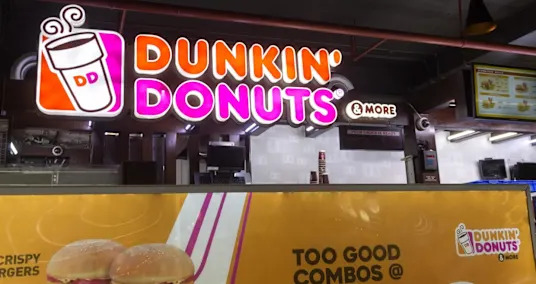
- Jubilant FoodWorks to scrap Dunkin’ franchise arrangement in India
- Hostile to Maturing Skincare Items to Rejuvenate Your Skin
- Inside Plan with Houseplants: An Aide
- Former Israeli judge does not expect Netanyahu to be pardoned
- The most effective method to Decisively Use Open Record Rewards
- Day to day Temporary Positions That Compensate Fairly in the US
- China’s new condom tax will prove no effective barrier to country’s declining fertility rate
- True serenity: Investigating Emotional well-being and the Advantages of Contemplation
- Six Flags Opens the Tallest, Fastest and Longest Roller Coaster in the World